Jetties, Wharves and Pontoon Footings in Wollongong
Get a Free EstimateWollongong Jetty and Pontoon Concrete
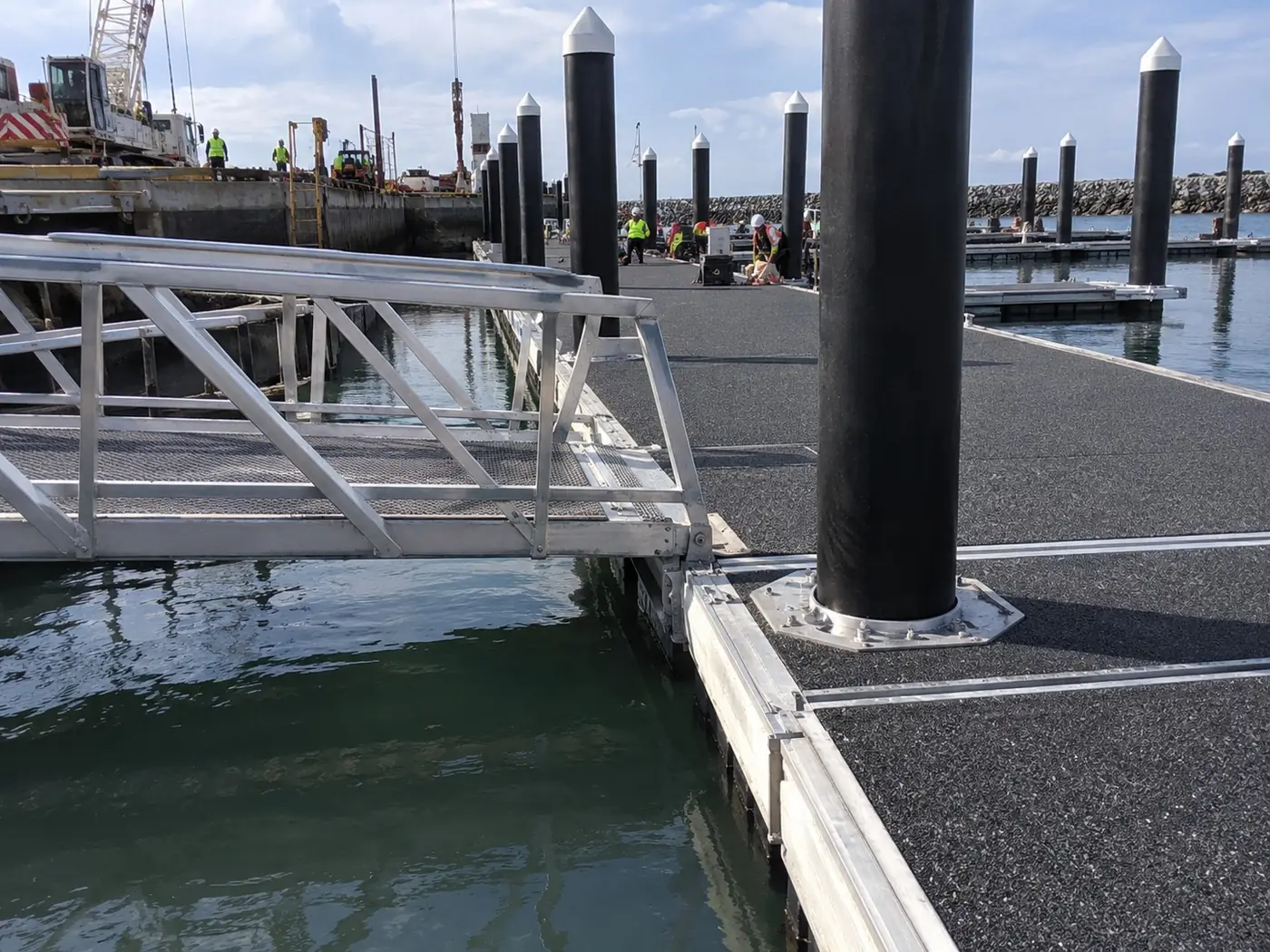
Every jetty, wharf and floating pontoon depends on the concrete you never really notice: the pile caps, abutments, gangway landings and anchor blocks that hold it all in place. We pour and supply those elements for builders, marine contractors and waterfront owners, including pontoon footings in Wollongong, on Lake Illawarra and along the sheltered waters of the wider region.
Marine concrete has to survive salt, constant wetting and drying, and the occasional battering from a storm. We work strictly to the engineer's drawings, set every cast-in fixing with care and time our pours around the tide and the weather. Where the piling is handled by a specialist crew, we fit in alongside them and keep the job moving. Tell us what you are planning and we will talk you through the concrete side.
Concrete Elements for Jetties, Wharves and Pontoons
Pile Caps and Headstocks
Once the piles are in, the concrete that ties them together carries the whole deck. We form and pour pile caps and headstocks to the engineer's levels, with the reinforcement and cast-in fixings set exactly where the deck framing needs them.
Landing Abutments
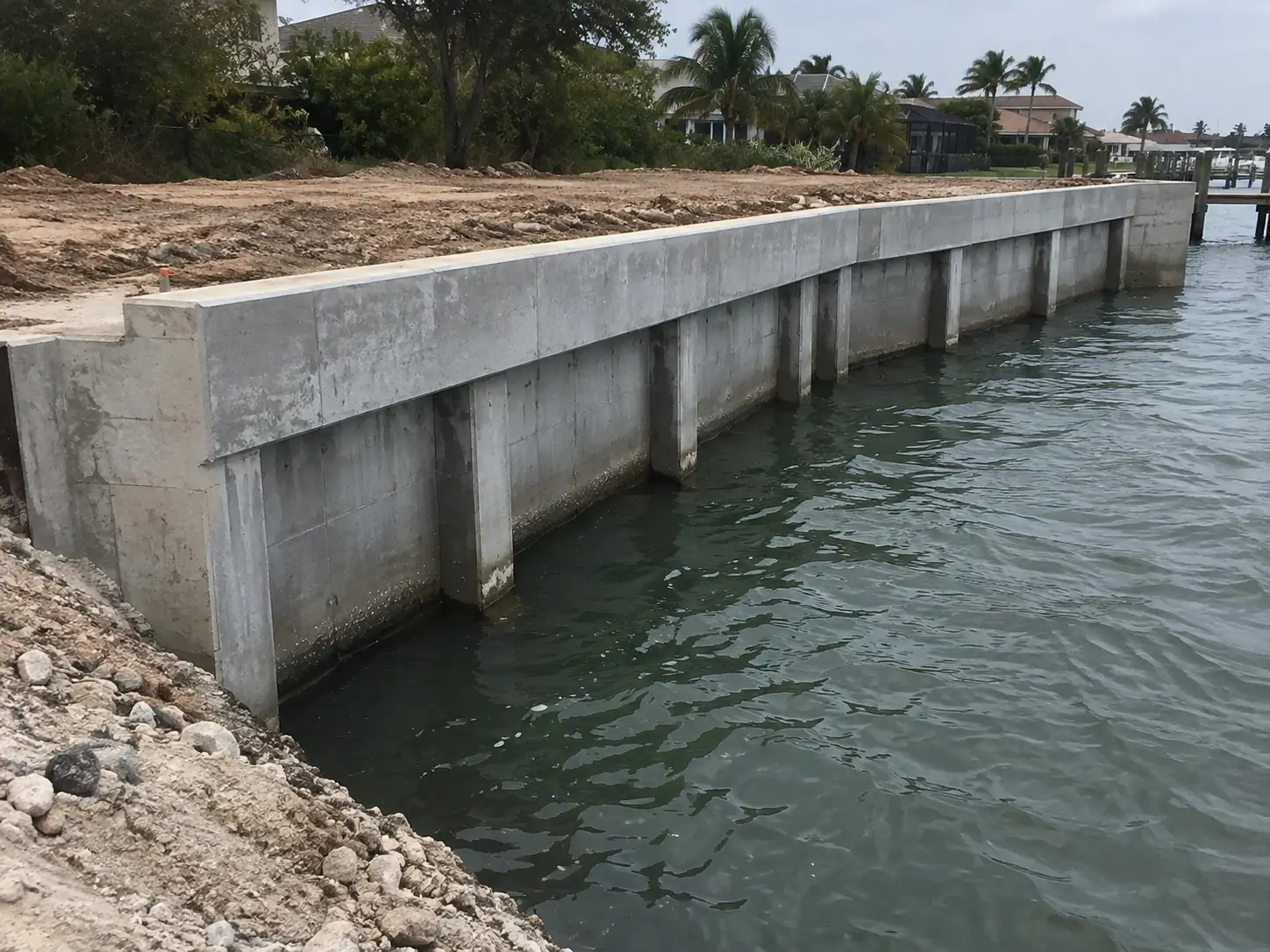
The shore end of a jetty or wharf needs a solid abutment where the structure meets the bank. We build reinforced abutments that anchor the deck, retain the ground behind them and resist the scour that waves cause at the shoreline.
Gangway Landings
A pontoon rises and falls with the tide, so the gangway needs a fixed landing on the shore with hinge or pivot points set accurately. We pour landing pads and plinths with the bolts and plates positioned to suit the gangway supplier's details.
Anchor and Mass Blocks
Some floating pontoons are held in place by heavy concrete blocks rather than piles. These are cast to the weight and shape the designer specifies, with lifting points and chain fixings, ready to be placed by the marine crew.
Precast Marine Elements
Casting deck units, beams, caps or blocks in the dry and lifting them into place cuts down on the time spent working over water. It also means curing happens in controlled conditions, not with the tide lapping at the formwork.
Working With Piling Contractors
Driving or drilling piles is specialist marine work, usually done by dedicated piling crews. We slot in alongside them, supplying, placing and finishing the concrete elements so the job moves smoothly from piles to deck.
Three Ways to Start on Your Jetty or Pontoon Footings
Waterfront structures have more moving parts than most concrete jobs, from piling crews to state permits. Here are three simple ways to bring us in.
- Send the engineering package: If your structure has been designed, mention the drawings and specifications in the form and have them ready for the site visit, and we will price each cap, abutment and block as drawn.
- Tell us how it will be used: Still working out the design? Describe the boats, the water depth and whether you want a fixed jetty or a floating pontoon, and we can explain where concrete fits in.
- Show us the site: A visit at low tide lets us check the shoreline, access for trucks, pumps or cranes, and whether parts are best cast in the dry and lifted in.
The abutment where a jetty meets the bank often needs to work as a retaining structure too, so it pairs naturally with our coastal retaining walls. Footings sit in a severe exposure zone, which is why we usually pour them with high-strength structural concrete or a dedicated marine-grade mix as your engineer directs. Get in touch for a free estimate.
What Marine Builders and Waterfront Owners Get From Us
Fixings Where They Belong
A cast-in bolt that is 20 mm out can hold up an entire deck crew. We set out embedded plates, bolts and sleeves from the shop drawings and check them again before the pour.
Built for the Splash Zone
The area just above the waterline cops the most salt and wet-dry cycling. Your engineer sets the grade, cover and detailing for that exposure, and we compact and cure the concrete so it can perform.
Tide and Swell Windows
Pours over or beside the water are booked around low tide and calm conditions. If the forecast turns, we would rather reschedule than risk a pour against the sea.
Good Site Coordination
Jetties involve piling crews, steel fixers, crane operators and deck builders. We work to the programme and keep everyone informed so nobody is left waiting on the concrete.
Protecting the Waterway
Concrete washout, slurry and form oil must not end up in the water. We use bunding, contained washout and careful handling to keep the job clean around sensitive estuaries and lakes.
Honest About Our Role
We are concreters, not a full marine construction firm. If your project needs a piling contractor or coastal engineer, we will say so and work alongside them rather than overreach.
A Look at Our Wollongong Concrete Work
Jetty, Wharf and Pontoon Footing Questions
Common questions from Illawarra waterfront owners and contractors about piling, approvals, precast units and keeping marine steel from rusting.
Pile driving and drilling over water is specialist work, and it is usually carried out by a marine piling contractor with the right barge or plant. Our part is the concrete: pile caps, headstocks, abutments, landings, anchor blocks and any precast units. We are happy to work as part of a team with the piling contractor, or to price the concrete package for a builder or marine contractor running the job.
Most jetties, wharves and pontoons need development consent, and because they usually sit over water below the mean high water mark, they can also need landowner consent and licences from state bodies such as Crown Lands, Transport for NSW maritime and NSW DPI Fisheries, particularly where fish habitat or seagrass is involved. Coastal planning controls may apply as well. The requirements vary from site to site, so confirm with Wollongong City Council, Shellharbour City Council or Kiama Municipal Council and the relevant state agencies before committing. An engineer will normally design the structure.
Pouring over water is slow and risky. You are fighting the tide, the swell and limited access, and fresh concrete does not like being splashed with salt water before it sets. Casting caps, beams or blocks in the dry gives better control over compaction and curing, and the units can be lifted in quickly during a calm window. In-situ pours still make sense for some elements, such as abutments on dry land, and your engineer will decide which approach suits each part.
The main defences are dense, well-compacted concrete and enough cover between the steel and the surface. Marine designs often use a low water to cement ratio and supplementary materials like fly ash, slag or silica fume to slow salt penetration. Some engineers also specify corrosion inhibitors or galvanised, stainless or coated reinforcement. We build to whatever your engineer specifies and take care with chairs, spacers and compaction so the cover is actually achieved.
Yes, in many cases. Common problems include spalling around corroded reinforcement, cracked pile caps and worn abutments. Repairs usually involve breaking back to sound concrete, treating or replacing the steel and rebuilding the section with a marine repair mortar or a new pour. Some damage needs an engineer to assess the structure first, and works over water may still need approvals. Our concrete spalling repair page covers this kind of work in more detail.
More services that pair well
Need concrete for a jetty or pontoon?
Share the drawings or describe the structure, and we will send back a clear price for the concrete package.